
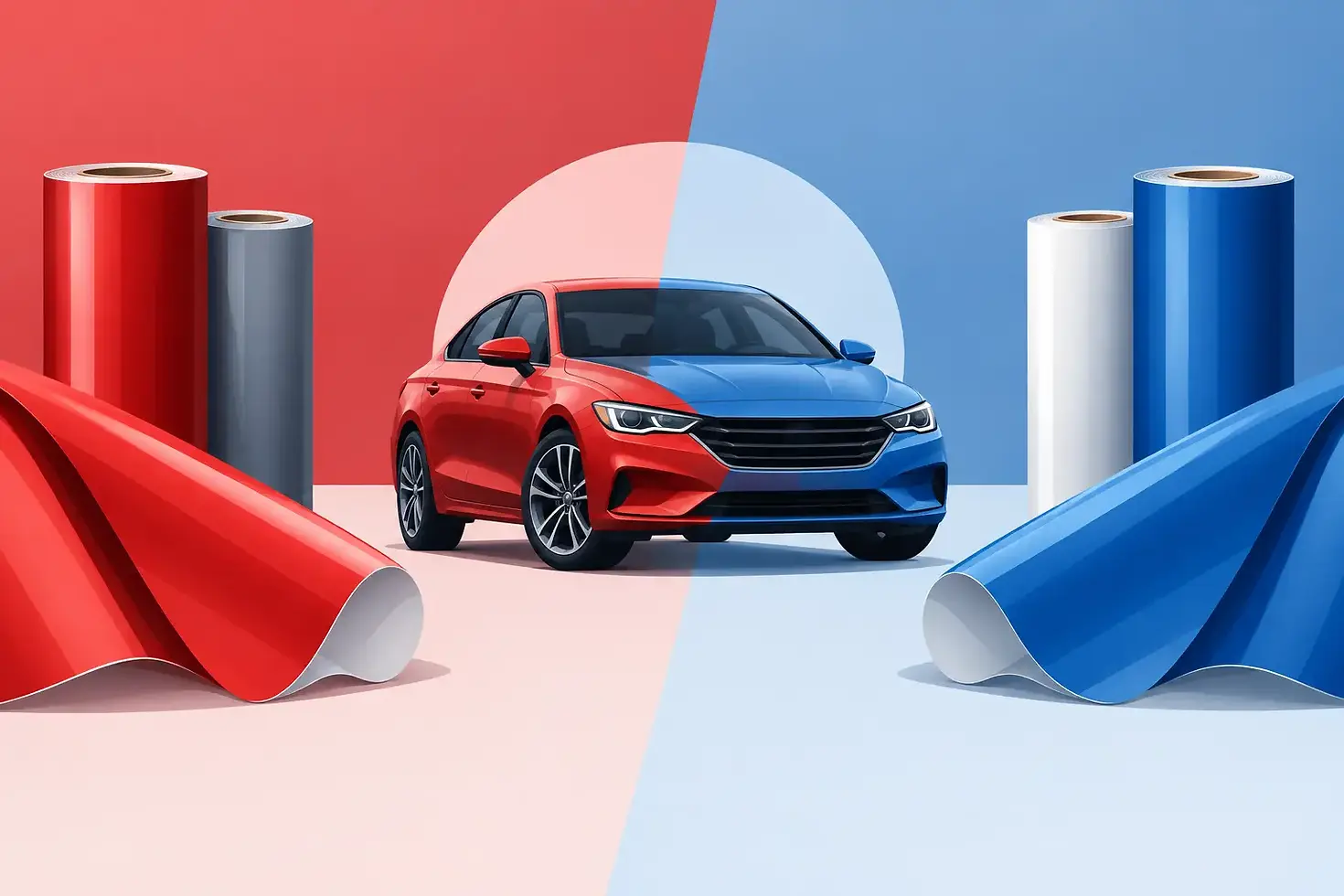
3M Versus Avery Vinyl: Which Wrap Fits Best?

A dark satin colour change on a Tesla, a printed van graphic for a London trades business, or a dechrome package on a premium SUV all start with the same practical question: 3M versus Avery vinyl, which is right for the job? Both are respected professional brands, and both can produce an excellent result. The better choice depends on the vehicle, the finish, the design, the expected lifespan and, crucially, the quality of the installation.
For customers, the badge on the backing paper matters less than a wrap that looks right, performs reliably and is fitted without unnecessary vehicle downtime. For installers, material choice affects how cleanly a film conforms around bumpers, mirrors, recesses and complex body lines. That is why a proper recommendation should be based on the project rather than a one-brand-fits-all answer.
3M versus Avery vinyl: the key differences
3M and Avery Dennison each offer premium cast wrapping films designed for vehicle application. Cast vinyl is made for demanding curves and contours, making it a far stronger choice for a full wrap than lower-cost calendared sign vinyl. The individual product range matters as much as the manufacturer, however. A colour-change film, a digitally printable film and a protective overlaminate are built for different purposes.
3M is widely known for its extensive professional film range and long-established place in the vehicle graphics sector. Its wrapping films are often selected for demanding commercial applications, including fleet branding and printed graphics, where dependable performance, colour consistency and approved print systems can be important. Many installers also value the familiarity of working with 3M materials across varied vehicle types.
Avery Dennison has an equally strong reputation, particularly among colour-change customers who want a high-end finish and a broad choice of distinctive shades. Its films are frequently praised for their conformability and finish quality, with options that can suit intricate panels and modern vehicle styling very well. For a private owner choosing gloss, satin, metallic, pearlescent or textured effects, the available colour range may be the deciding factor.
Neither brand automatically wins every project. The right material is the one that meets the specification and is applied correctly to a properly prepared vehicle.
Finish and appearance on real vehicles
A wrap is viewed from every angle, in changing light and often at close range. That makes finish quality a priority, especially on prestige cars, sports models and newer EVs where broad panels show imperfections quickly.
Both 3M and Avery vinyl can deliver a premium gloss, satin or matt appearance. Differences can be subtle once the wrap is installed, but they are not irrelevant. Some colours and finishes will look deeper, smoother or more refined in one range than another. A particular shade might also be available from only one manufacturer. If you are trying to match a brand colour, create a distinctive fleet look or achieve a specific visual effect, viewing physical swatches is far more reliable than choosing from a screen.
For commercial vehicles, appearance goes beyond the base film. Printed graphics must remain sharp and colour-accurate, while the laminate needs to protect the print from weather, road grime and regular washing. A plain white van with carefully designed, professionally printed branding can work harder for a business than an elaborate design produced on unsuitable material.
The installation also has a major effect on the final look. Clean edges, carefully finished joins and correct treatment around handles, sensors and trims separate a polished wrap from one that soon looks tired. Premium film does not compensate for rushed fitting.
Gloss, matt and textured wraps
Gloss wraps tend to show preparation flaws more readily, particularly on dark colours. Matt and satin finishes can be more forgiving visually, but they require careful cleaning because abrasive polishing and unsuitable products may alter the surface. Textured films, including carbon-look options, are best used selectively where they complement the vehicle rather than compete with its shape.
A good installer will discuss how a finish will look on your specific vehicle, not simply show a small swatch under workshop lighting. The size of the panel, the body colour beneath it and where the vehicle is parked all influence the final impression.
Conformability matters more than most buyers expect
Modern vehicles are not flat advertising boards. They have deep bumpers, sharp swage lines, compound curves, recessed number plate areas and tightly shaped mirror housings. A film needs to stretch and conform without being overstressed, otherwise lifting, distortion or premature failure becomes more likely.
This is one area where both 3M and Avery Dennison professional wrapping ranges are designed to perform well. An experienced fitter will still assess each panel individually. On complex areas, the best result may involve strategic use of inlays or well-positioned joins rather than forcing one large piece of film where it does not naturally want to sit.
That is not a shortcut. When done properly, it is sound wrapping practice that protects the finish and helps the material remain stable. The aim is always a clean, durable result with joins placed as discreetly as possible.
Vehicle condition matters too. Damaged lacquer, corrosion, fresh paint, failing previous repairs and rough plastic trims can all affect adhesion. Vinyl is not a repair product, and it can reveal defects that were less obvious in the original paintwork. An honest pre-installation inspection prevents surprises later.
Durability, maintenance and London use
How long a wrap lasts depends on far more than the 3M versus Avery vinyl decision. Exposure to sun, frequent motorway mileage, roadside parking, washing methods, fuel spills and poor preparation all have an impact. A vehicle kept outside year-round and driven daily through London will face a different environment from a weekend car stored under cover.
Premium cast films from either manufacturer are made for exterior vehicle use, but warranties and expected service life vary by product, colour, orientation and application. Darker colours and horizontal surfaces often receive more UV exposure. Printed wraps have their own considerations because the ink and laminate system also contribute to performance.
Maintenance is straightforward but worth doing properly. Wash the vehicle regularly with a pH-neutral product, avoid aggressive brushes and do not direct a pressure washer too closely at panel edges, badges or joins. Bird droppings, tree sap and fuel residue should be removed promptly. Matt and satin finishes should not be polished like paint, as this can create shiny patches.
For businesses, the practical benefit is consistency. A cared-for fleet wrap keeps branding presentable on every job, from a single service van to a group of coaches or larger vehicles. It also makes later removal cleaner when the vehicle is sold, replaced or rebranded, provided the underlying paintwork was sound at the outset.
Printed branding versus colour-change wraps
A full colour-change wrap and a commercial printed wrap may use similar installation techniques, but material selection follows different priorities.
For a private colour change, the focus is usually finish, colour choice, coverage and the ability to work neatly around detailed bodywork. The customer may prefer an Avery Dennison colour available in a particular satin tone, or select a 3M option that gives the desired visual effect. There is no reason to force the choice if another premium film better suits the brief.
For business branding, print quality, laminate compatibility and repeatability become more significant. If a fleet grows over time, the new vehicles need to match the existing branding closely. A specialist wrapping company should manage the artwork, printing and fitting as one coordinated process, so the logo, colours and installation standards remain consistent.
This is particularly valuable for busy businesses. A well-planned schedule, accurate production and efficient fitting reduce disruption while putting branded vehicles back on the road quickly.
Is one vinyl brand better value?
The cheapest quote is rarely the best measure of value. A lower-cost material may be suitable for short-term promotional graphics or simple flat applications, but it is not the same proposition as a premium cast wrap fitted for long-term appearance and durability. Equally, paying for a premium brand name without checking the exact film and installer experience does not guarantee the right outcome.
Value comes from the complete job: correct material, sound paintwork assessment, precise design or colour matching, professional preparation, controlled installation and clear aftercare advice. For commercial customers, it also includes how well the wrap communicates the business and how little time the vehicle spends off the road.
At CarWrap24, the recommendation is based on the vehicle and the intended result, whether that is a refined colour change, a practical dechrome, high-impact van branding or a coordinated fleet application. The aim is not to favour a badge on the box. It is to fit a high-quality film that looks right on day one and continues to represent you properly in the months ahead.
Before committing to either option, ask to see the actual finish, explain how the vehicle is used and be clear about your priorities. The right vinyl choice becomes much easier when the project is planned around your vehicle, your brand and the result you want people to notice.


Comments