
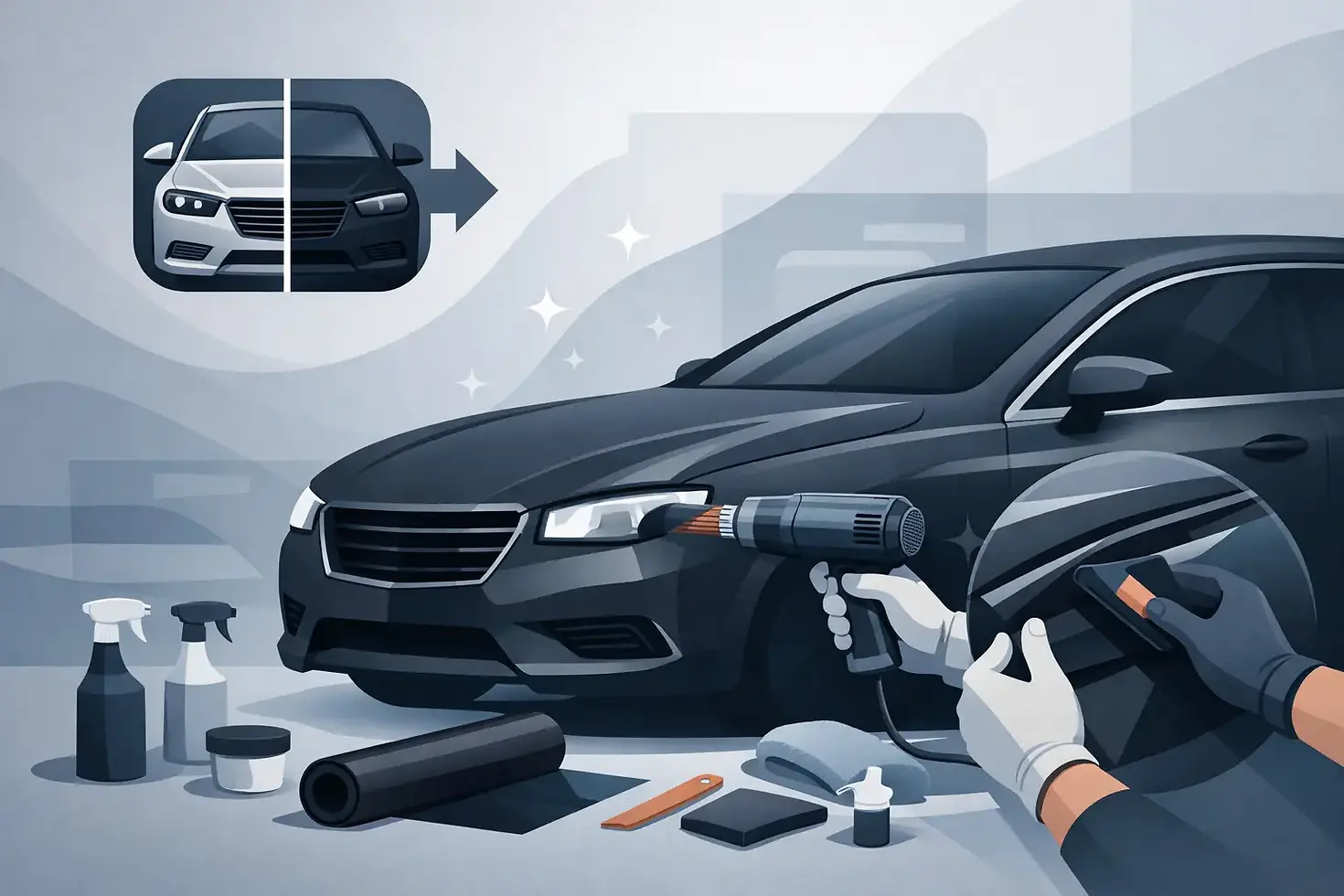
How to Dechrome a Car Properly

Chrome window trims can make an otherwise sharp vehicle look dated in seconds. If you are looking up how to dechrome a car, you are probably after a cleaner, more modern finish without committing to permanent paintwork changes.
For most vehicles, dechroming is done by wrapping the chrome trim in high-quality vinyl rather than painting or replacing the parts. That gives you a smarter look, protects the original finish underneath and, when fitted properly, keeps the result neat around curves, corners and tight edges. It is one of the most effective ways to update a car’s appearance with minimal downtime.
What does it mean to dechrome a car?
Dechroming a car means covering or replacing the bright chrome exterior trim so it blends better with the rest of the vehicle. On most modern cars, that usually includes the window surrounds, front grille details, side vents, badges and sometimes bumper trims.
The most popular finish is gloss black because it gives a factory-style look and suits almost any paint colour. That said, satin black, matt black and colour-matched options can also work well depending on the car and the result you want.
If the aim is a premium OEM-style finish, vinyl wrapping is usually the best route. It is quicker than removing and repainting trim, it is reversible, and it avoids the cost of sourcing replacement parts that may not fit quite right.
How to dechrome a car with vinyl wrap
If you want the short answer to how to dechrome a car, it is this: clean the trim thoroughly, prepare the surface properly, apply a specialist wrapping film, and finish every edge with care. The detail matters far more than most people expect.
The first stage is inspection. Not all chrome trim is in the same condition. Some pieces are smooth and ideal for wrapping, while others may be pitted, peeling or already damaged. Wrap film needs a stable surface to bond well. If the chrome is lifting or corroded, covering it may not give a durable finish.
Next comes cleaning and preparation. Any wax, polish, road film or traffic residue left on the trim will affect adhesion. Professional installers use proper surface preparation methods to make sure the film sits cleanly and securely, especially around rubber seals and narrow channels.
Then the vinyl is applied. This sounds simple, but chrome trim is rarely flat. Window surrounds often have tight radii, joins and tapered sections, and grille elements can be even more intricate. Good installation is about precise cutting, tension control and edge finishing. Poorly fitted film tends to lift first at corners and exposed ends.
The last stage is post-heating and checking the edges. This helps the film settle into shape and reduces the risk of movement over time. On a daily-driven vehicle, this part makes a real difference to longevity.
Why wrapping is usually better than painting
Drivers often compare wrapping against painting when deciding how to dechrome a car. In most cases, wrapping wins on practicality.
Paint can work on removable trim, but it is more permanent and often more disruptive. If the parts stay on the vehicle, masking has to be exact and the finish can vary depending on the material underneath. If the parts come off, there is labour involved, plus the risk of clips breaking during removal. Some trims are not designed to come off and go back on repeatedly.
Wrapping avoids most of that. It preserves the original chrome underneath, gives a consistent finish across multiple trim pieces and can be removed later if you sell the vehicle or want a different look. For leased cars, that reversibility is often a major advantage.
There is also the visual side. A well-installed gloss black dechrome wrap tends to look cleaner and more uniform than painted trim, especially on window surrounds where even small imperfections stand out.
Which parts can be dechromed?
Most people start with the window trims because they change the whole look of the car straight away. On many models, those bright surrounds are the main feature dating the exterior.
Front grilles are also common, although they depend on shape and access. Some grille sections wrap very well. Others have deep recesses or heavy texture that make the finish less suitable for vinyl. Badges and emblems can sometimes be wrapped, but on intricate designs it may be better to replace or refinish them instead.
Lower bumper strips, side trim inserts, mirror details and roof rails may also be included. The right approach depends on the design of the part, the condition of the chrome and how exposed it is to impact, weather and washing.
That is why the honest answer is that there is no one-size-fits-all method. Some cars are straightforward. Others need a selective approach to get the best result and avoid wasted effort.
Can you do it yourself?
Technically, yes. Realistically, it depends on the vehicle, your expectations and your patience.
A simple strip of chrome on a flat trim piece is one thing. A full set of window surrounds on a modern saloon or SUV is another. DIY jobs often look acceptable from a distance but show problems up close - trapped air, stretched corners, rough cuts and edges that begin to lift after a few weeks.
The challenge is not just applying the vinyl. It is finishing it neatly around seals, joins and tight corners without damaging paintwork or rubber trims. On premium vehicles, those details matter. A dechrome should look intentional, not like an add-on.
If you want a result that matches the standard of the rest of the vehicle, professional fitting is usually worth it. It saves time, reduces waste and avoids the false economy of redoing the job later.
How long does a dechrome wrap last?
A professionally installed dechrome wrap can last for years, but longevity depends on film quality, installation standard and how the car is used. A vehicle parked outside year-round and washed frequently at aggressive hand car washes will naturally put more stress on the edges than one that is carefully maintained.
The type of trim matters too. Window surrounds generally hold up well when prepared and fitted properly. High-impact areas on front bumpers or heavily textured parts are more exposed and may wear sooner.
Maintenance is straightforward. Gentle washing is best, and it helps to avoid directing high-pressure water right at exposed film edges. You do not need to treat wrapped trim like glass, but it does pay to be sensible.
Choosing the right finish
Gloss black is the most requested dechrome finish because it looks close to factory styling on many vehicles. It adds contrast on white, silver and grey cars, and it sharpens darker paint colours without being too obvious.
Satin black gives a softer, more understated look and can suit executive cars or commercial vehicles where a more subtle finish works better. Matt black is less common because it can show marks more easily and may not blend as naturally with surrounding paint and trim.
If you are dechroming as part of a wider styling update, it is worth thinking about how the trim will sit alongside existing details such as mirror caps, roof wraps, tinted windows or alloy finishes. The best result usually comes from treating the car as a whole rather than changing one area in isolation.
Is dechroming worth it?
For many owners, absolutely. It is one of the most cost-effective visual upgrades you can make to a car. The transformation is often immediate, especially on vehicles where chrome trim dominates the side profile.
For private owners, it creates a cleaner, more contemporary appearance without permanent modification. For business vehicles, it can help align the look of the vehicle with a more modern brand image, particularly when paired with graphics or a full wrap.
It also makes sense from a practical point of view. Full replacement trim can be expensive. Paint can be awkward to reverse. Wrapping gives you flexibility with a polished finish and less disruption.
When professional installation makes the biggest difference
The more detailed the trim, the more valuable experienced fitting becomes. Premium saloons, performance cars, Teslas and large SUVs often have trim layouts that expose every small mistake. Commercial vehicles can be simpler in places, but they also need durable results that stand up to regular use.
An experienced wrap company will assess what can be wrapped cleanly, where a part may need a different treatment and how to get the finish looking consistent across the whole vehicle. That judgement is part of the service. It is not just about applying film - it is about knowing what will last and what will look right.
For customers in and around London, working with a specialist such as CarWrap24 also means the dechrome can be handled alongside other wrap work if needed, keeping the process efficient and the finish consistent.
If you are considering how to dechrome a car, the best starting point is not the vinyl itself but the result you want. A good dechrome should make the car look cleaner, sharper and better resolved - as if it left the factory that way.


Comments