
Removable Car Wrap vs Paint: Which Wins?
- Tom Karolczak

- May 23
- 6 min read
A fresh finish can change how a vehicle looks, how a business is seen and, in some cases, how well the original bodywork holds up over time. When people compare removable car wrap vs paint, they are usually not choosing between two identical solutions. They are choosing between flexibility and permanence, speed and downtime, visual impact and long-term commitment.
For some owners, paint is the right answer. For many others, especially drivers who want a colour change without altering the factory finish or businesses that need branded vehicles on the road quickly, a professional wrap makes more sense. The best choice depends on what you need the vehicle to do, how long you plan to keep it and how important reversibility is.
Removable car wrap vs paint: the real difference
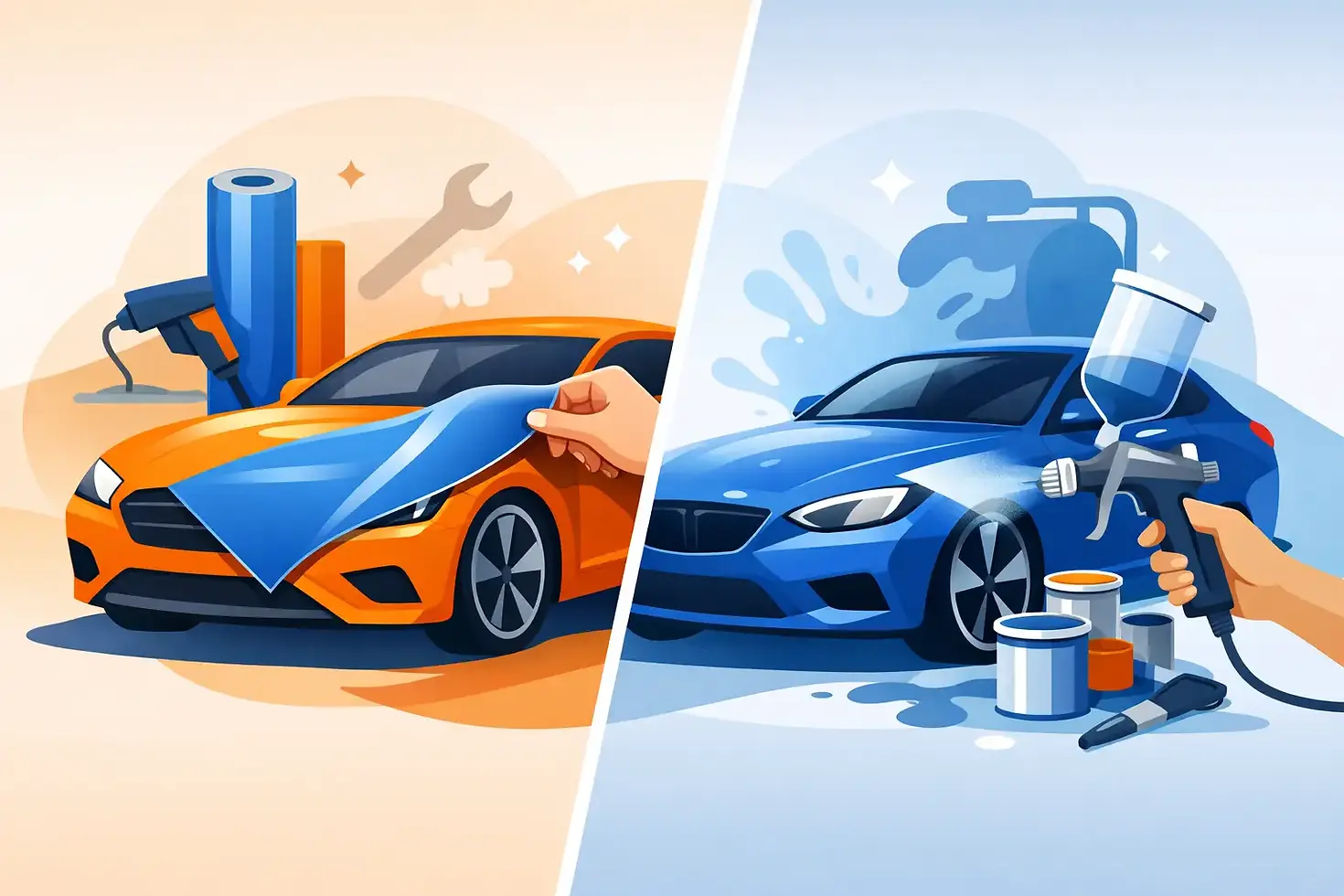
Paint changes the vehicle itself. Once it is done properly, it becomes part of the car or van and reversing that decision is costly. A removable wrap sits over the existing paintwork as a high-quality vinyl layer, giving you a new colour, finish or branded design without making a permanent change.
That difference matters more than most people expect. If you own a prestige car and want to protect the original paint, a wrap gives you that option. If you manage a fleet and need consistent branding across multiple vans, wraps allow you to apply, update or remove graphics with far less disruption than a repaint. If you simply want a new look but may change your mind in a year or two, removable vinyl offers flexibility that paint cannot.
There is also the matter of process. A quality paint job involves preparation, spraying, curing and careful finishing. A quality wrap also relies on preparation and skilled installation, but the turnaround is often faster and cleaner, which is a major advantage for working vehicles.
When paint is the better option
Paint still has a clear place, and it would be misleading to suggest otherwise. If a vehicle has damaged panels, corrosion or failing existing paint, bodywork and repainting may be necessary before any cosmetic decision is made. Wrap is not a shortcut for poor body condition.
Paint can also be the better route if you want a permanent colour change and have no interest in returning to the original finish. For classic restorations, accident repair or situations where the surface underneath is already compromised, repainting may be the correct long-term solution.
A very high-end respray can look exceptional. Done well, it can produce a deep, refined finish that suits certain vehicles and ownership goals. The trade-off is that it is usually more expensive, more time-consuming and much harder to undo.
When a removable wrap makes more sense
For colour changes, business branding and image-led upgrades, wraps are often the more practical option. You can achieve gloss, satin, matte, metallic or specialist finishes without permanently affecting the original paint. For commercial vehicles, you can add full branding, logos, contact details and campaign graphics in a way that is far more adaptable than paint.
This is where a one stop shop approach becomes valuable. Design, print and installation all affect the final result. If those parts are handled separately, it is easier for delays or quality issues to creep in. With an experienced wrap specialist, the process is more controlled from start to finish.
Wraps are particularly useful for leased vehicles, company fleets and newer cars where owners want to preserve resale appeal. If the wrap is removed correctly, the original finish underneath can remain in strong condition.
Cost, value and what you are really paying for
Price is one of the first things people ask about in the removable car wrap vs paint debate, but headline cost alone does not tell the full story.
A basic paint job may look cheaper at first, but it is not directly comparable to a professionally installed wrap or a high-quality respray. Proper paintwork can become expensive very quickly once preparation, repairs, labour and finishing are included. A full colour change respray is rarely a small job.
A wrap often offers better short- to medium-term value, especially when you factor in flexibility. If you want to refresh branding in two years, remove a colour change before sale or protect the factory finish while using the vehicle daily, wrap gives you options. That has value beyond the initial invoice.
For businesses, downtime is part of the cost as well. A van off the road is not just in a workshop - it may also be missing jobs, deliveries or customer visibility. Wraps can reduce that disruption compared with repainting, which is one reason they are a popular choice for commercial fleets.
Appearance and finish quality
People often assume paint always looks better. That is not necessarily true. A professionally installed wrap can look extremely sharp, clean and premium, particularly on modern vehicles with well-kept original paint.
The finish quality comes down to materials, preparation and fitting skill. Cheap vinyl and rushed installation will never deliver the same result as high-grade films fitted by experienced hands. Edges, recesses, handles, mirrors and complex curves all need proper attention.
Paint still has strengths in certain cases. If a vehicle needs body correction first, paint can create a fully restored surface rather than simply covering it. But for straight, well-maintained vehicles, wraps can achieve an excellent finish while offering more design freedom. That is especially useful for businesses wanting standout graphics or private owners after a distinctive look that is not available from the factory.
Durability and day-to-day use
Neither option is indestructible. Paint can chip, fade and mark. Wrap can also suffer damage if it is exposed to poor care, harsh conditions or low-quality installation.
A professionally installed wrap using quality vinyl should hold up well in normal daily use. It can also act as a sacrificial layer, taking minor wear that would otherwise affect the original paint beneath. That appeals to drivers who want to preserve the vehicle while still changing its appearance.
Paint may have the edge in outright longevity if it is maintained well and the goal is a finish that stays in place for many years without removal. But durability has to be judged against purpose. If you only need a branded van livery for a contract period, or you want a colour change for three to five years, the fact that wrap is removable is an advantage, not a weakness.
Resale value and protecting the original finish
This is one of the strongest arguments in favour of wrapping. Original manufacturer paint usually matters when it comes to resale, particularly on higher-value cars. A removable wrap allows you to change the vehicle's appearance while keeping that original finish underneath.
That does depend on the condition of the paint before the wrap is applied and how the wrap is removed later. If both are handled properly, wrapping can help preserve the car rather than compromise it. For leased cars and premium vehicles, that flexibility is often a deciding factor.
A full respray can affect buyer confidence because it raises questions. Was the car repaired? Was it changed to cover previous damage? Sometimes that concern is justified, sometimes not, but it is part of the market reality.
What businesses should consider
For commercial vehicles, this is rarely just a style choice. It is a branding and operations decision. Paint is fixed. Wrap can evolve with the business.
If your logo changes, contact details are updated or vehicles are reassigned, wrap gives you more control. It also allows for a consistent finish across vans, buses and coaches without committing each vehicle to permanent paintwork. For growing businesses, that matters.
Turnaround matters too. The right wrap partner will think about scheduling, production and fitting in a way that keeps disruption low. That is particularly important for trades, delivery operators and fleets that cannot afford unnecessary downtime.
So which wins?
If you want a permanent change on a vehicle that already needs body and paint work, paint may be the stronger option. If you want flexibility, faster turnaround, brand visibility or a way to protect original paint while changing the look, a removable wrap is often the smarter choice.
Most people asking about removable car wrap vs paint are not looking for a universal winner. They want the option that suits their vehicle, budget and plans. That is why good advice always starts with the condition of the vehicle, the finish you want and how long you expect to keep it that way.
For drivers and businesses across London, the best result usually comes from choosing the method that matches the job rather than the one that sounds more permanent. If you get that part right, the vehicle works harder for you from day one.


Comments